Author: Shaheer Ahmed

  • Tesla Cars: How They Work, Pros and Cons, and the Future of Electric Vehicles

    Tesla, Inc., founded by Elon Musk and others in 2003, has transformed the automotive industry by pushing the boundaries of electric vehicle (EV) technology. Known for innovation, sleek design, and high performance, Tesla cars are among the most recognized and influential electric vehicles in the world. In this article, we’ll explore how Tesla cars work, their pros and cons, and what the future may hold for electric vehicles—including which Tesla models and competitors are poised to lead.

    How Tesla Cars Work

    Tesla cars are fully electric, meaning they do not rely on internal combustion engines or gasoline. Instead, they operate using electric motors powered by high-capacity lithium-ion batteries. Here’s a breakdown of how Tesla vehicles function:

    1. Electric Motor and Battery System

    At the heart of every Tesla is its battery pack, typically mounted on the floor of the car. Tesla uses thousands of small lithium-ion cells grouped together to form the battery. This battery powers one or more electric motors that turn the wheels. Depending on the model, Tesla cars can have one (rear-wheel drive) or two motors (all-wheel drive).

    2. Regenerative Braking

    Tesla vehicles employ regenerative braking, which captures energy normally lost during braking and sends it back into the battery. This improves efficiency and extends range, while also reducing wear on brake pads.

    3. Autopilot and Full Self-Driving (FSD)

    Tesla cars are also known for their advanced driver-assistance features. Autopilot includes lane centering, adaptive cruise control, and auto lane change. Tesla’s Full Self-Driving (FSD) package, still under development and regulatory review, aims to offer autonomous driving in a wider range of conditions.

    4. Over-the-Air (OTA) Software Updates

    Tesla vehicles are like smartphones on wheels—receiving regular software updates over Wi-Fi. These updates improve performance, fix bugs, and add new features, even after the car is sold.

    Pros of Tesla Cars

    Tesla has gained a loyal following thanks to a number of compelling advantages:

    1. Environmental Benefits

    Tesla vehicles produce zero emissions, helping to reduce air pollution and dependence on fossil fuels. Charging from renewable energy sources makes them even greener.

    2. Lower Operating Costs

    Electric motors have fewer moving parts than gasoline engines, leading to lower maintenance costs. Electricity is also cheaper than gasoline on a per-mile basis.

    3. High Performance

    Tesla cars are known for their acceleration and handling. For example, the Model S Plaid can go from 0 to 60 mph in under 2 seconds—making it one of the fastest production cars ever.

    4. Cutting-Edge Technology

    From massive touchscreen interfaces to AI-powered driver assistance, Tesla leads the industry in in-car technology. Features like Summon (self-parking) and Smart Navigation add to the futuristic feel.

    5. Supercharger Network

    Tesla’s proprietary Supercharger network allows for fast charging on long trips. It’s one of the most extensive and reliable EV charging infrastructures globally.

    Cons of Tesla Cars

    Despite their popularity, Tesla vehicles come with some drawbacks:

    1. High Initial Cost

    Even the more affordable Tesla Model 3 has a higher upfront price compared to many gasoline-powered vehicles. While operating costs are lower, the initial investment can be a barrier for many buyers.

    2. Build Quality Concerns

    Some customers have reported issues with fit and finish, such as panel gaps, paint defects, and interior materials—especially in earlier models or during production ramp-ups.

    3. Limited Service Network

    Tesla’s service centers are not as widespread as traditional dealerships. This can lead to longer wait times for repairs, especially in less-populated areas.

    4. Range Anxiety

    While Tesla vehicles offer industry-leading range (up to 400+ miles in some models), charging infrastructure and range anxiety remain concerns for long-distance drivers, particularly outside urban areas.

    5. Autopilot Limitations

    Although Autopilot is impressive, it is not fully autonomous. Drivers must remain attentive, and there have been incidents where over-reliance on Autopilot led to accidents.

    Current Tesla Lineup

    As of 2025, Tesla offers several vehicles:

    • Model S – A luxury sedan with long range and high performance.
    • Model 3 – A compact sedan that is Tesla’s most affordable and popular vehicle.
    • Model X – A luxury SUV with distinctive falcon-wing doors.
    • Model Y – A crossover SUV that combines space, performance, and efficiency.
    • Cybertruck – A futuristic, angular pickup truck with impressive specs and towing capacity.
    • Roadster (upcoming) – Promises to be the fastest car in the world, with a 0-60 mph time under 2 seconds.

    Future of Tesla and the EV Market

    Tesla isn’t alone in shaping the electric future. Legacy automakers and startups are investing heavily in EVs, and global regulations are pushing for a transition away from fossil fuels.

    Tesla’s Upcoming Innovations

    • Robotaxi Fleet: Tesla aims to launch a fully autonomous taxi service using its Full Self-Driving technology.
    • Next-Gen Vehicles: A $25,000 Tesla compact car has been teased, aimed at making EVs more accessible worldwide.
    • New Battery Technologies: Tesla is working on 4680 battery cells, which promise increased range, lower costs, and improved longevity.

    Challengers and Alternatives

    Other manufacturers are rapidly catching up:

    • Lucid Air (by Lucid Motors): Offers ultra-luxury interiors, advanced tech, and over 500 miles of range.
    • Rivian R1T and R1S: Rugged trucks and SUVs with off-road capabilities.
    • Ford F-150 Lightning: A popular electric pickup built on the best-selling truck platform in the U.S.
    • Hyundai Ioniq 6 and Kia EV6: Stylish, tech-forward electric sedans and crossovers.
    • Volkswagen ID Series: Affordable EVs with solid performance and build quality.

    Which Cars Will Be the Best EVs in the Future?

    The EV market is expected to explode in the next decade. While Tesla remains a dominant force, competition is fierce. The best EVs of the future will likely balance affordability, performance, and sustainability. Here are some models to watch:

    • Tesla Model 2 (expected) – Tesla’s planned affordable car under $30,000, aiming for mass-market adoption.
    • Lucid Gravity (SUV) – A luxurious and powerful electric SUV.
    • Apple Car (rumored) – If it materializes, Apple’s entry into EVs could disrupt the market significantly.
    • Chinese EV brands (like BYD and NIO) – Offering quality at competitive prices, these brands are expanding globally.

    Conclusion

    Tesla has played a monumental role in popularizing electric vehicles, offering high-tech, high-performance cars that break from traditional norms. With unique advantages like over-the-air updates, Autopilot, and an extensive charging network, Tesla has set the bar for modern EVs. However, challenges like pricing, service, and competition remain.

    As technology advances and more companies enter the market, the future of electric vehicles looks bright. Whether it’s a Tesla or another innovative brand, the next generation of EVs promises to be smarter, cleaner, and more accessible than ever before.

  • iOS 26: Apple’s Boldest Update Yet – Features, Pros, and Cons

    Apple has officially unveiled iOS 26, marking one of the most significant overhauls to the iPhone experience in over a decade. With a striking new design, powerful on-device AI capabilities, and deep integration across Apple’s ecosystem, iOS 26 aims to redefine how users interact with their devices. Here’s an in-depth look at what iOS 26 brings to the table, along with its advantages, drawbacks, and what users can expect as it rolls out in 2025.

    Launch and Availability

    iOS 26 was introduced at Apple’s annual Worldwide Developers Conference (WWDC) in June 2025. Developer and public betas are being released throughout the summer, with the final version expected to be available in the fall. The update will support the iPhone 11 and newer, but some advanced features will be exclusive to the latest iPhone 15 Pro, 15 Pro Max, and the upcoming iPhone 16 series.

    A Stunning New Look: The Liquid Glass Design

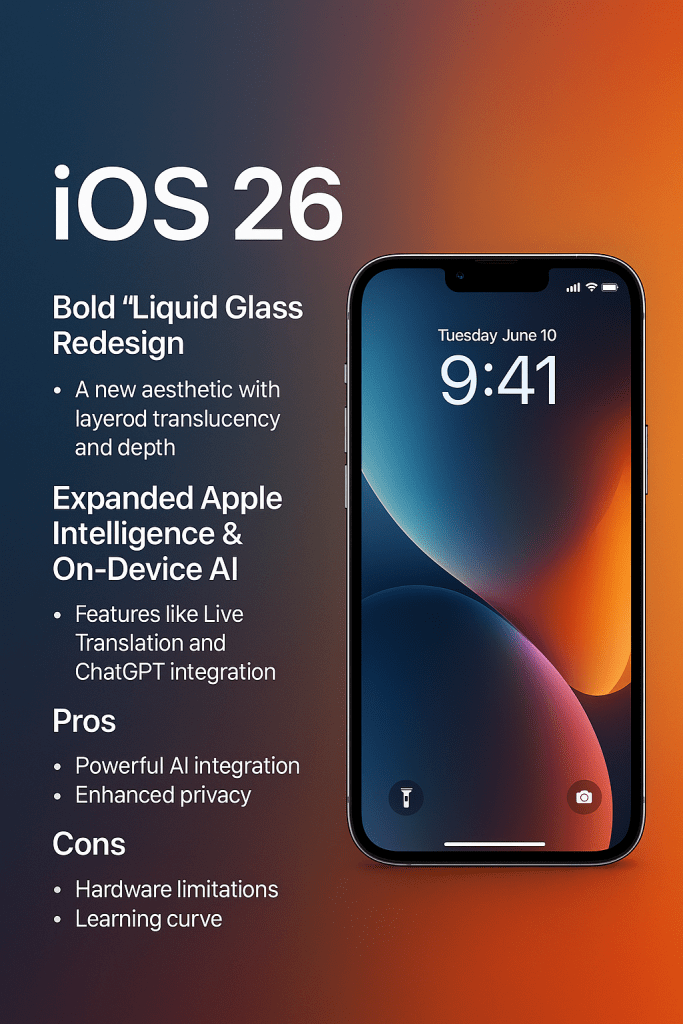
    The most visually striking change in iOS 26 is the introduction of the Liquid Glass design language, a new aesthetic that replaces the flat visuals of past iOS versions with layered translucency and depth. Inspired by Apple Vision Pro’s visual style, the interface now features glass-like panels, curved edges, dynamic lighting, and real-time reflections.

    Control Center, app menus, notification banners, and widgets now have a more spatial, tactile appearance. Users can also personalize home screen elements with dynamic icon styles and interactive clock displays that respond to wallpaper content and time of day.

    This redesign brings a breath of fresh air to the iPhone, aligning the mobile interface more closely with Apple’s broader ecosystem—especially for users who also own iPads, Macs, or Vision Pro.

    Smarter Than Ever: Apple Intelligence and AI Integration

    A major highlight of iOS 26 is the rollout of Apple Intelligence—Apple’s privacy-first take on generative AI. Unlike cloud-based AI services, Apple’s system processes information locally whenever possible, prioritizing user privacy.

    Here are some key AI features in iOS 26:

    • Live Translation: Real-time voice and text translation within phone calls, Messages, and FaceTime. This makes conversations between different languages seamless and natural.
    • ChatGPT Integration: Through a new assistant interface, users can generate summaries, answer complex questions, or create custom images and emojis, right from Messages or Safari.
    • Genmoji & Image Playground: A fun tool that lets users create their own emoji mashups or generate AI backgrounds for their chats and lock screens.
    • AI-Powered Shortcuts: The Shortcuts app can now use AI to automate tasks like summarizing articles, generating reports, or editing media.
    • Adaptive Battery Mode: Dynamically adjusts performance and battery consumption based on user behavior and environmental conditions.

    However, it’s worth noting that many of these advanced AI features are only available on the newest devices—particularly those equipped with the A17 Pro chip or later.

    Upgraded Communication Features

    iOS 26 introduces several updates to how we make calls, send texts, and interact through Apple’s core apps:

    • Hold Assist: A smart feature that waits on hold for you during calls to businesses or customer service, notifying you when a real person is available.
    • Call Screening: Automatically screens and transcribes unknown calls, letting users see who’s calling and why before picking up.
    • Phone App Redesign: Merges Favorites, Recents, and Voicemail into a cleaner, streamlined interface.
    • Improved Messages: Adds chat backgrounds, message reactions with Genmoji, in-chat polls, scheduled messages, and group money transfers.
    • FaceTime Enhancements: Includes real-time captioning, live translation, and even optional content filters for family-friendly video calls.

    Better Driving and Entertainment Experience

    Apple continues to evolve its in-car and media services. With iOS 26:

    • CarPlay Gets Smarter: New compact notifications, pinned chats, and support for real-time Live Activities like maps and delivery updates make driving more efficient.
    • Apple Maps: Adds personalized history, traffic alerts, and airport maps, including features like gate numbers and baggage tracking.
    • Apple Music Enhancements: Now includes translated lyrics, pronunciation guides, AutoMix for seamless playlist transitions, and improved social sharing tools.
    • New Games App: iOS 26 introduces a dedicated Games app that serves as a unified hub for all iPhone games, Apple Arcade titles, and social challenges.

    Subtle but Powerful System Improvements

    Beyond the headline features, iOS 26 introduces numerous system-wide enhancements:

    • Camera App Upgrades: New 3D photo features create subtle movement effects using depth data and motion tracking.
    • Wallet App: Expanded support for loyalty cards, installment plans, and real-time shipping tracking.
    • Notes & Reminders: AI helps create task lists and summarize notes. Notes now sync more fluidly with Apple Watch and other Apple devices.
    • Accessibility: Improved screen reader features, full Braille keyboard support, and better labeling in third-party apps.

    Pros of iOS 26

    1. Fresh New Design: The Liquid Glass aesthetic revitalizes the iPhone experience with stunning visuals and fluid motion.
    2. Powerful AI Integration: Real-time translation, task automation, image generation, and smart assistance bring real productivity benefits.
    3. Enhanced Privacy: Apple Intelligence runs locally, meaning user data stays on the device wherever possible.
    4. Better Communication Tools: Call screening, message customization, and FaceTime upgrades enhance how users connect.
    5. Cross-Device Integration: Seamless experiences across iPhone, Mac, iPad, and CarPlay.

    Cons of iOS 26

    1. Hardware Limitations: Many AI features are only available on newer iPhones, limiting the experience for users with older models.
    2. Learning Curve: The radical UI change may take time for long-time iOS users to get used to.
    3. Beta Bugs: Early adopters of the beta versions might face performance issues, crashes, or app incompatibilities.
    4. Storage and Processing: The AI tools and design features can demand more from the device, potentially reducing storage and performance on base models.

    Final Verdict

    iOS 26 is a bold step forward for Apple. It blends a dramatic visual refresh with intelligent, privacy-preserving AI tools, improved communication options, and meaningful usability upgrades. While some features are limited to the newest hardware, the overall update offers something for nearly every user—whether it’s smarter messaging, a more immersive design, or increased efficiency.

    For users with newer iPhones, iOS 26 is a compelling and transformative upgrade. For those with older devices, it may be time to consider upgrading to unlock the full potential of what Apple’s latest mobile operating system has to offer

  • Kali-GPT: The Future of AI-Driven Cybersecurity

    In the ever-evolving world of cybersecurity, the need for smarter, faster, and more adaptive tools is growing at an unprecedented rate. One of the most exciting developments to emerge in this space is Kali-GPT — an advanced AI model engineered specifically to assist in both offensive and defensive cybersecurity tasks. Named as a hybrid tribute to the popular Kali Linux distribution and the GPT (Generative Pre-trained Transformer) architecture, Kali-GPT aims to revolutionize how cybersecurity professionals operate in digital battlegrounds.

    In this article, we’ll explore what Kali-GPT is, how it can be used, and its potential advantages and limitations in real-world scenarios.

    KALI GPT

    What is Kali-GPT?

    Kali-GPT is a specialized large language model (LLM) designed to function as a cybersecurity assistant. Inspired by the capabilities of OpenAI’s GPT models, it integrates the structure and syntax of AI with a focus on cybersecurity contexts — particularly penetration testing, ethical hacking, digital forensics, malware analysis, and security hardening.

    Unlike general-purpose AI models, Kali-GPT is tailored with a training dataset enriched by security manuals, exploit documentation, CVE databases, code snippets from penetration testing tools, and behavioral data from real-world security events. This makes it uniquely positioned to assist cybersecurity professionals in understanding, writing, and executing tasks related to both offense and defense in cyberspace.

    Key Use Cases of Kali-GPT

    1. 

    Offensive Security (Ethical Hacking)

    Kali-GPT can help security researchers and ethical hackers generate payloads, craft phishing templates, or write custom scripts for scanning vulnerabilities. It can even simulate basic penetration testing workflows and generate reports that mimic the structure used by real-world red teams.

    • Example: Kali-GPT can generate a Metasploit payload for a specific exploit scenario, or explain the steps needed to bypass a particular firewall configuration.

    2. 

    Defensive Security (Blue Team)

    Blue teams can use Kali-GPT to analyze logs, identify anomalies, suggest firewall rules, and even respond to active security incidents. It can work as a co-pilot during incident response by summarizing threat intelligence data or suggesting countermeasures.

    • Example: Given a suspicious log entry, Kali-GPT might correlate the data with known attack patterns and suggest a remediation plan.

    3. 

    Malware Analysis

    Security analysts often need to deconstruct malicious binaries or scripts. Kali-GPT can assist in reverse engineering, de-obfuscating code, and providing explanations for what the malware is doing, line by line.

    • Example: Uploading a snippet of obfuscated PowerShell can yield a human-readable breakdown of its function and risk level.

    4. 

    Training and Education

    Kali-GPT is also an invaluable tool for training the next generation of cybersecurity professionals. It can generate realistic lab environments, mock interviews, quizzes, and explain complex topics like buffer overflows or privilege escalation in simplified terms.

    Pros of Kali-GPT

    ✅ 

    Accelerated Workflows

    Kali-GPT dramatically reduces the time it takes to perform routine tasks such as vulnerability scanning, payload generation, or SIEM log analysis. This is especially beneficial for professionals managing large-scale infrastructures or SOC (Security Operations Center) teams dealing with multiple threats simultaneously.

    ✅ 

    Knowledge Access On-Demand

    Whether you’re a junior analyst or a senior penetration tester, Kali-GPT allows quick access to the collective knowledge of thousands of cybersecurity documents, tools, and best practices. It’s like having a virtual cybersecurity consultant available 24/7.

    ✅ 

    Supports Ethical Hacking Missions

    Unlike traditional GPT models that have restrictions on generating potentially harmful content, Kali-GPT is designed with the assumption that its users are operating within ethical and controlled environments. This means it can assist in ways other models might decline, as long as it’s used responsibly.

    ✅ 

    Customizable and Extensible

    Advanced users can fine-tune Kali-GPT with organization-specific data or compliance frameworks. For example, a company could feed its internal threat models or logs into a private Kali-GPT instance to make it more context-aware.

    Cons and Concerns of Kali-GPT

    ❌ 

    Potential for Misuse

    As with any dual-use technology, Kali-GPT can be abused. If it falls into the wrong hands, it could be used to generate highly sophisticated malware or social engineering campaigns. This raises ethical and legal concerns that the cybersecurity community and policymakers must address.

    ❌ 

    False Sense of Security

    AI tools like Kali-GPT can appear intelligent, but they are still prone to hallucinations and errors. Over-reliance on its outputs without human verification could lead to incorrect configurations or missed vulnerabilities.

    ❌ 

    Requires Expert Oversight

    To truly benefit from Kali-GPT, users must have a baseline understanding of cybersecurity. While it can explain concepts in simpler terms, it won’t replace the critical thinking and judgment of a skilled human operator.

    ❌ 

    Compliance and Privacy Risks

    Feeding sensitive log files or proprietary scripts into a cloud-based model may violate data privacy laws or internal security policies, depending on the deployment method. Organizations must ensure that data shared with Kali-GPT is anonymized and compliant with relevant regulations.

    The Future of Kali-GPT

    Kali-GPT is more than just a niche tool — it’s a glimpse into the future of cybersecurity powered by artificial intelligence. We can expect future versions to become more context-aware, support multimodal inputs (e.g., logs, packet captures, code), and integrate more tightly with existing security platforms.

    Developers are also exploring ways to integrate Kali-GPT with platforms like SIEMs (e.g., Splunk, ELK) and SOAR systems to create autonomous or semi-autonomous security agents capable of real-time threat hunting and response.

    Conclusion

    Kali-GPT is a powerful example of how generative AI is transforming cybersecurity. By combining the vast knowledge of GPT-based systems with the tools and techniques of ethical hacking and defensive analysis, it empowers professionals to stay one step ahead of emerging threats.

    However, with great power comes great responsibility. The cybersecurity community must ensure that tools like Kali-GPT are developed, deployed, and used ethically and securely. When guided by human expertise and proper safeguards, Kali-GPT has the potential to redefine how we defend (and test) the digital world.

    Ready to explore what Kali-GPT can do for your organization? Whether you’re building a red team, hardening your blue team, or just curious about the bleeding edge of cybersecurity, Kali-GPT is a tool worth watching — and using — wisely.

  • The Evolution, Impact, and Future of Technology

    Technology has been the driving force of human progress for centuries, evolving from primitive tools to the complex digital systems that define modern life. As we navigate the 21st century, technology continues to shape our world at an unprecedented pace, touching every aspect of society—from communication and healthcare to education, transportation, and entertainment. This article explores the evolution of technology, its current impact on our daily lives, and what the future may hold.

    The Evolution of Technology

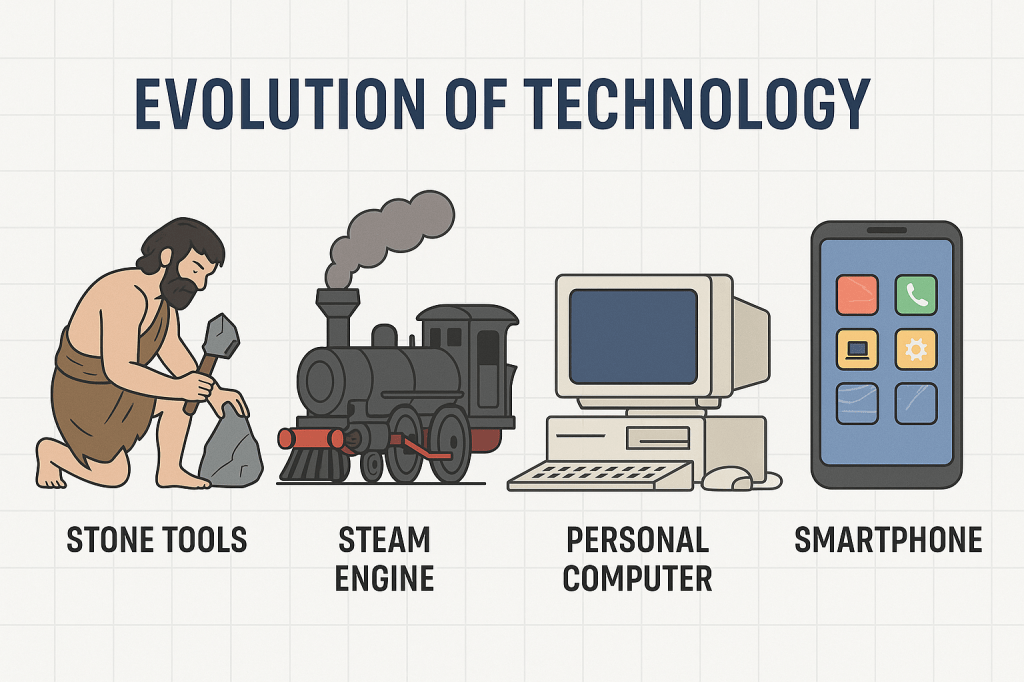
    The journey of technology began with the earliest human inventions—simple tools made from stone, wood, and bone. These early technologies helped humans hunt, build shelter, and protect themselves. The discovery of fire and the invention of the wheel marked significant milestones in prehistoric innovation, setting the stage for more advanced developments.

    With the advent of agriculture around 10,000 years ago, human societies began to settle and grow, prompting the need for better tools and systems. The Bronze and Iron Ages introduced metalworking, leading to stronger tools and weapons. Over time, these technologies contributed to the rise of civilizations.

    The Industrial Revolution in the 18th and 19th centuries was a turning point in technological progress. Mechanized production, steam engines, and innovations in transportation and manufacturing transformed economies and societies. Factories replaced handcrafts, trains connected distant cities, and machines began to do the work once reserved for human hands.

    The 20th century witnessed even more radical changes. Electricity became widespread, the automobile and airplane changed travel forever, and the invention of the telephone, radio, and television revolutionized communication. However, the most transformative technological leap came in the latter half of the century with the advent of computers and the internet.

    The Digital Age

    The digital revolution, beginning in the 1970s, introduced computing power into every facet of life. The personal computer made its debut, followed by the internet, which connected the world in ways previously unimaginable. The 1990s and 2000s saw the rise of mobile phones, email, and the World Wide Web, which radically changed how people interact, work, and access information.

    Social media platforms, cloud computing, and e-commerce emerged in the early 21st century, creating new industries and redefining existing ones. Today, billions of people rely on digital technology for daily activities, including banking, shopping, learning, and socializing.

    Artificial Intelligence (AI) and Machine Learning (ML) have further accelerated technological advancement. AI systems can now perform complex tasks such as language translation, image recognition, and even medical diagnosis. Technologies like virtual assistants, recommendation engines, and autonomous vehicles showcase how far AI has come and its potential to reshape the future.

    Impact on Society

    Technology has had profound effects on how we live and work. Some of the most significant impacts include:

    1. Communication

    Technology has revolutionized communication. From emails and text messages to video calls and social media, people can now connect across the globe instantly. Platforms like Zoom, WhatsApp, and Slack have become integral to personal and professional interactions, especially during events like the COVID-19 pandemic.

    2. Education

    Technology has transformed education by making learning more accessible and flexible. Online courses, educational apps, and virtual classrooms enable students from different parts of the world to access quality education. Tools like Khan Academy, Coursera, and Duolingo empower self-paced learning and skill development.

    3. Healthcare

    In the healthcare sector, technology has led to major improvements in diagnostics, treatment, and patient care. Electronic health records, telemedicine, and wearable health devices allow for better monitoring and management of health. AI-driven tools are now used to detect diseases like cancer at early stages, saving lives and reducing costs.

    4. Business and Work

    Businesses have adopted digital technologies to streamline operations, improve customer service, and innovate products. Remote work, enabled by collaboration tools like Microsoft Teams and Google Workspace, has become the norm for many companies. Automation and data analytics allow businesses to operate more efficiently and make informed decisions.

    5. Transportation

    From electric vehicles to ride-sharing apps, technology is revolutionizing transportation. Companies like Tesla are pushing the boundaries of sustainable transport, while autonomous driving technology continues to develop. GPS navigation, real-time traffic updates, and smart logistics systems make travel and goods delivery faster and more efficient.

    6. Entertainment

    The entertainment industry has been transformed by technology. Streaming platforms like Netflix, YouTube, and Spotify have replaced traditional media, offering on-demand content to global audiences. Video games, virtual reality, and augmented reality are redefining how people engage with digital experiences.

    Challenges and Ethical Considerations

    While technology brings many benefits, it also presents challenges and ethical dilemmas. Issues such as data privacy, cybercrime, digital addiction, and job displacement due to automation must be addressed carefully.

    Data Privacy and Security

    As more personal information is stored online, concerns about privacy and data security have grown. Cyberattacks, identity theft, and data breaches can have serious consequences. Protecting user data and building secure digital systems is a priority for governments and businesses alike.

    Job Displacement

    Automation and AI threaten to replace jobs in sectors like manufacturing, retail, and even services. While new jobs will emerge, reskilling the workforce is essential to ensure people are not left behind in the digital economy.

    Digital Divide

    Not everyone has equal access to technology. The digital divide—differences in access to devices, internet, and digital literacy—can widen social and economic inequalities. Bridging this gap is vital for inclusive technological progress.

    AI Ethics

    As AI becomes more integrated into decision-making, questions about bias, transparency, and accountability arise. Algorithms can perpetuate societal biases if not properly designed. Ensuring ethical AI development is crucial to prevent harm and build trust.

    The Future of Technology

    Looking ahead, several emerging technologies promise to reshape our world in even more dramatic ways:

    • Artificial General Intelligence (AGI): Moving beyond narrow AI to machines that can perform any intellectual task a human can.
    • Quantum Computing: Offering immense processing power for problems beyond the capability of classical computers.
    • Biotechnology and Genetic Engineering: Revolutionizing medicine and agriculture through gene editing tools like CRISPR.
    • Space Exploration: Private companies like SpaceX and Blue Origin aim to make space travel more accessible, with goals of colonizing the Moon and Mars.
    • Sustainable Technology: Innovations in renewable energy, smart cities, and green technology will be vital in combating climate change.

    Conclusion

    Technology has been the catalyst of human advancement for millennia, growing more powerful and pervasive with each passing generation. While it offers vast opportunities to improve lives, it also comes with significant responsibilities. Navigating the future will require thoughtful innovation, ethical leadership, and inclusive policies that ensure everyone benefits from technological progress. In a rapidly evolving world, our ability to adapt, learn, and use technology wisely will determine the course of our collective future

Design a site like this with WordPress.com
Get started